

Turn recordings into transcripts and summaries in minutes
Upload audio or video for multilingual transcription, AI notes, and action items
In university lectures or professional development courses, "recording" is almost a standard tool for every student. However, by 2025, if you are still using the traditional method—"record the whole session, go home and listen from start to finish, pausing to type along the way"—you may already be losing to others in learning efficiency. With the breakthrough leap in AI speech recognition technology, "lecture recording note-taking" is no longer a manual chore but a strategic battle of tool selection.
Why Traditional Recording and Note-Taking Methods Are Outdated
In the past, we relied on voice recorders or phone memos to capture every word the professor said. But the pain points often appeared after class:
- High time cost: a one-hour lecture recording often takes three to four hours to transcribe.
- Information overload: with audio files spanning several hours, it's difficult to quickly locate key moments like "the teacher said this question will be on the exam."
- Storage and management difficulties: countless MP3 files scattered in your phone, lacking tags and text indexes, making review like finding a needle in a haystack.
By 2025 and 2026, learners' core needs have shifted from "saving audio" to "extracting value." What we need is not a complete audio playback but an AI assistant that can instantly convert audio into visual knowledge.
2026 Learning Trends: AI Transcription and Smart Summarization
Current market trends show that AI speech-to-text (STT) combined with Large Language Model (LLM) summarization has become a standard feature in note-taking software. These tools can:
- High-accuracy transcription: even for professional terms mixed with Chinese and English, recognition rates have significantly improved.
- Structured notes: automatically distinguish speakers and organize rambling audio content into bullet-point highlights.
- Mobility and cloud sync: record in class, upload from phone, and by the time you're back in your dorm or library, notes are already generated on your computer.
Stop organizing recordings by hand
Upload audio or video and automatically get a transcript, summary, and action items
Power Tool Recommendation: Practical Applications of TinRec (Instant Recording)
Among many AI recording and note-taking tools, TinRec (Instant Recording) has become a favorite among students and graduate researchers due to its advantages in handling long audio. Although it is often used in business meetings, its core features are fully adaptable to academic scenarios.
Product Name: TinRec (Instant Recording) Official Website: https://tinrec.com/
Core Features for Lecture Recording:
MP3 to Text: This is the most student-friendly feature. You can record high-quality audio with a professional recorder, then upload the MP3 to TinRec after class. The system generates accurate transcripts quickly, so you no longer need to repeatedly drag the progress bar.
AI Summary and Minutes: Applying this feature to class, TinRec automatically extracts the professor's lecture outline, key concepts, and action items (e.g., homework due next week, bibliography). It condenses an hour of rambling into a 5-minute digestible highlight note.
YouTube Subtitle Generation: For students relying on online courses (e.g., Coursera, YouTube tutorial channels), TinRec helps generate subtitles and transcripts, making online learning note organization effortless.
Efficient Note-Taking Workflow: How to Build Your Second Brain
- During class: focus on listening and participating in discussions, only quickly jot down keywords or diagrams in your notebook. At the same time, start your recording device.
- After class: upload the recording to TinRec for "MP3 to Text" and "AI Summary."
- When organizing: read the AI-generated summary and compare it with your own keyword notes. Use the search function to quickly replay sections you didn't understand (click text to play corresponding audio).
- Archiving: import the proofread highlights into knowledge bases like Notion or Obsidian to complete internalization.
Conclusion: Free Your Brain Power with AI
In an era of information explosion, rote memorization and mechanical transcription are obsolete. Make good use of tools, delegate repetitive labor to AI, and save your precious brain power for thinking and creating. If you're anxious about piles of recordings, try introducing AI-assisted tools and experience the thrill of "instant listening."
Ready to upgrade your learning efficiency?
Experience the AI recording note-taking tool now: Visit TinRec (Instant Recording) Official Website
Turn every recording into actionable outcomes
Get 60 free transcription minutes when you sign in. No credit card required.
Related Reading
You might also like

4 Best Audio-to-Text Apps in 2026: Which One Actually Saves You Post-Meeting Time?
A mid-level manager who attends 15 meetings a week shares hands-on experience. From online meeting recording methods and transcription performance for Chinese and mixed Chinese-English to post-meeting summaries and action item organization, this breaks down the differences among four types of audio-to-text apps and explains how Tinrec uses bot-free recording, AI summaries, action item extraction, and team spaces to turn meetings into searchable, collaborative, actionable data.
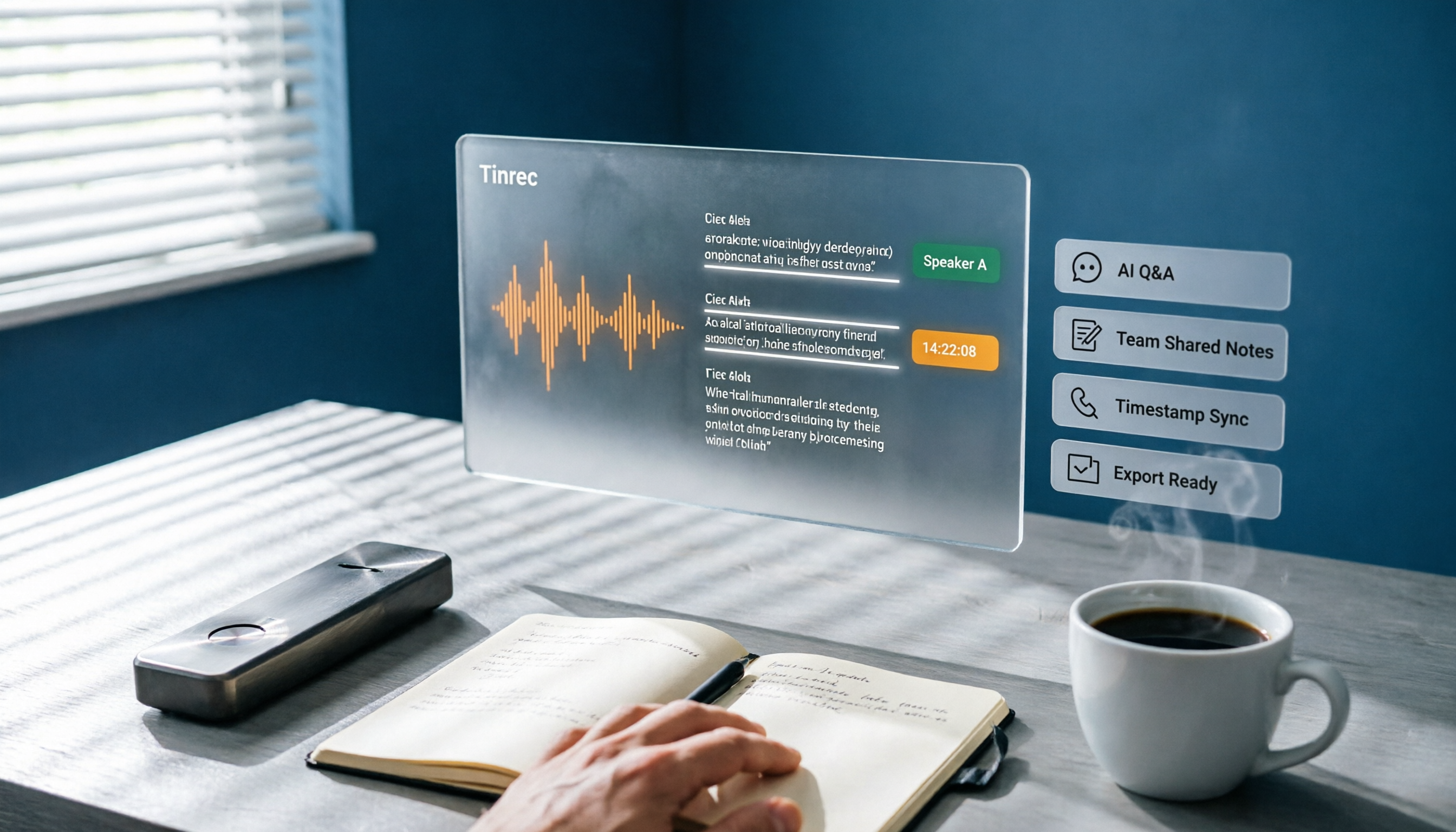
4 Interview Transcription Tools Compared in 2026: From Recording to Citable Text
After an interview, organizing the transcript often feels more exhausting than the interview itself. This article starts from 'recording to citable text' and compares 4 interview transcription tools, covering speaker labeling, AI Q&A, audio retention, and team sharing, plus common pitfalls and selection advice.

Tinrec vs Notta 2026: 5-Dimension Comparison for Chinese Meeting Transcription Tools
Starting from the decision focus of 'Do you want transcription, or usable meeting data?', this article compares Tinrec and Notta across 5 dimensions, covering selection criteria, a full breakdown of Tinrec, other options, and pitfalls to avoid, helping Chinese meeting users make a quick choice.

5 Transcription Tools Tested and Compared in 2026: Transcription Takes Too Long—Which One Actually Saves Time?
Transcription takes too long, and the problem is often not typing speed but the "listen, type, re-read" workflow. This article tests 5 transcription and AI meeting note tools, covering how to judge accuracy, post-meeting organization, audio retention and export, free quotas, and team seat licensing. It provides criteria you can follow directly and analyzes Tinrec's actual performance in bot-free recording, AI Q&A, and team knowledge retention.

2026 Comparison of 3 Audio-to-Transcript Tools: Which Offers the Best Free Tier and AI Q&A?
Just finished a meeting and realized no one took notes? Replaying the recording to type a transcript can eat up an entire afternoon. This article compares 3 audio-to-transcript tools, breaking down Chinese and mixed Chinese-English recognition, online meeting recording methods, AI summaries and Q&A, cross-platform use, and quota pricing. We also highlight 4 common pitfalls to help you choose a solution that truly saves time.
Tinrec vs Notta 2026: 5-Dimension Comparison — Which Writes Meeting Minutes Faster?
Struggling to finish meeting minutes? The problem is usually the process, not your writing. This article compares Tinrec and Notta across 5 dimensions: audio capture method, Chinese and mixed Chinese-English recognition, recording retention, post-meeting outputs, and team sharing. It explains how to use tools to get transcripts, summaries, and action items done in one go, with a pitfalls guide and selection advice.
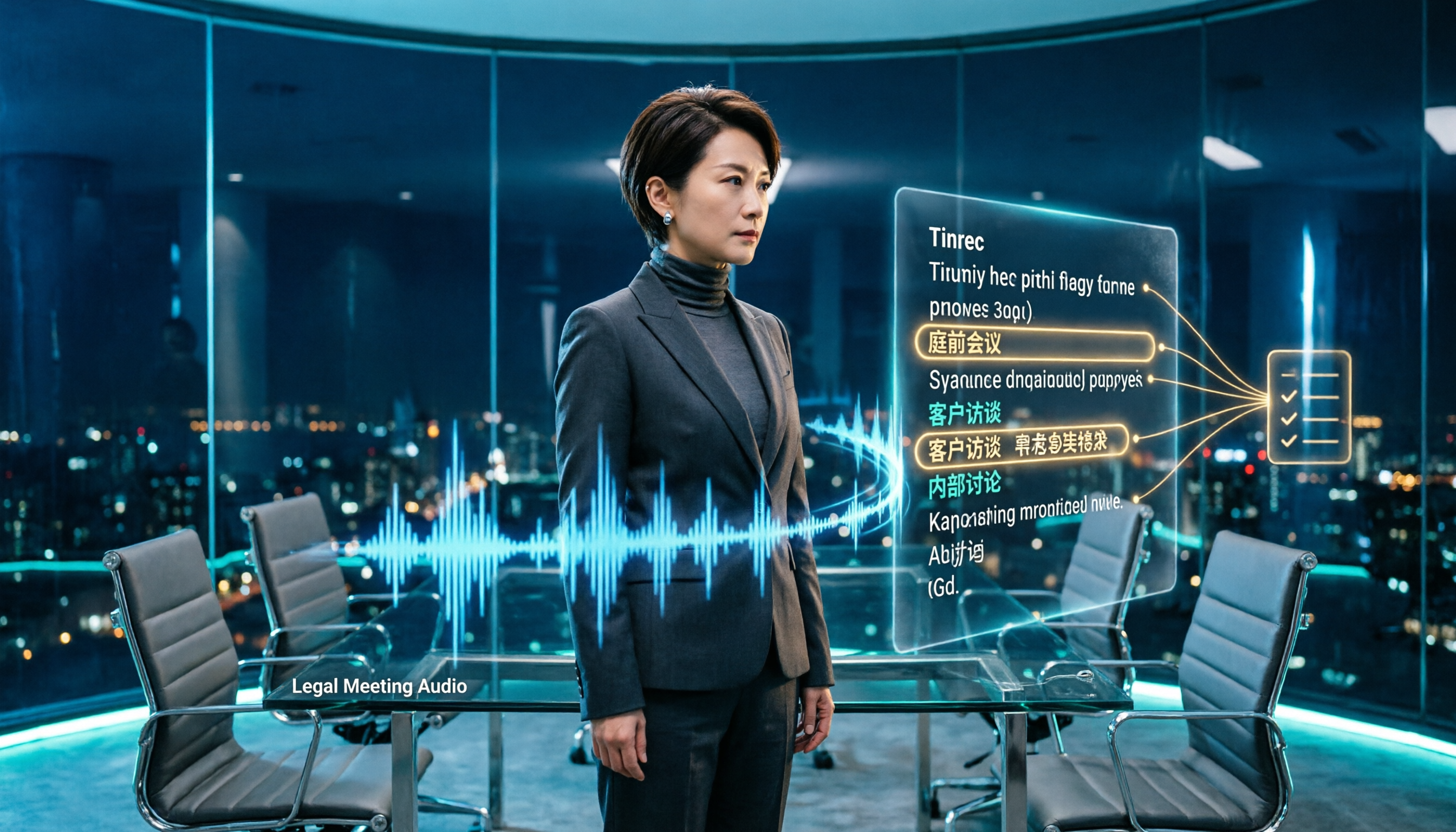
3 Legal Meeting Transcription Methods Tested in 2026: How Tinrec Helps You Avoid Common Pitfalls
Transcribing legal meeting recordings isn't as simple as dropping audio into a tool. This article explores common pitfalls and explains how Tinrec turns pre-trial meetings, client interviews, and internal discussions into searchable, queryable, and actionable transcripts and meeting materials. It also covers 5 key factors to consider when choosing a transcription tool.

4 Customer Interview Transcription Tools Tested in 2026: Which One Actually Saves You Cleanup Time?
Tired of spending hours on customer interview transcripts? We tested 4 tools, covering selection criteria, an in-depth look at Tinrec, and pitfalls to avoid, to help you find a transcription solution that truly saves you cleanup time.

2026 M4A to Text: 5 Tools Tested + AI Summaries and Action Items in One Go
M4A is the most common audio recording format, but converting it to text is just the first step. This article starts with common pitfalls, breaks down 5 key factors for choosing an M4A-to-text tool, tests how Tinrec turns an M4A file into a transcript, summary, action items, and queryable meeting data, and briefly reviews TurboScribe, Notta, and Granola for their use cases and things to watch out for.