
Turn recordings into transcripts and summaries in minutes
Upload audio or video for multilingual transcription, AI notes, and action items
In qualitative research, news interviews, or business meetings, "interview transcription" is often the most time-consuming and draining task. According to statistics, manually transcribing 1 hour of audio takes an average of 4 to 6 hours to produce an accurate transcript. However, with the explosive growth of generative AI in 2025, we have officially entered the era of "AI speech-to-text transcription."
This article will walk you through the latest transcription trends in 2026 and put a rising star tool to the test—TinRec (Miao Ting Recorder)—and see how it redefines our workflow.
New Trends in Interview Transcription for 2026
In the past, ASR (Automatic Speech Recognition) technology mainly solved the problem of "hearing clearly." But from 2025 to 2026, user needs have escalated to "understanding and organizing." Current market trends focus on three key areas:
- Semantic Understanding & Summarization: Raw transcripts are often too long. AI can now automatically extract core insights, action items, and decisions from interviews.
- Multilingual & Mixed-Language Handling: For business contexts that mix English with other languages or regional accents, next-gen models (e.g., improved Whisper) have significantly increased accuracy.
- All-in-One Integration: Users no longer want separate dictaphones or file conversion websites. They need a single platform that combines "call recording," "live recording," and "video-to-text."
Why Traditional Transcription Is Becoming Obsolete
For researchers, journalists, or product managers, time is the most valuable asset. Manual transcription is not only inefficient but also prone to errors from prolonged focus. While outsourcing transcription services is an option, it costs hundreds of dollars per hour and risks leaking confidential interview data.
In contrast, modern AI tools can process one hour of recording in just a few minutes, with accuracy exceeding 95% (depending on recording quality), and protect data security through cloud encryption. This is not just a tool upgrade but a shift in mindset—spending time on "analyzing insights" rather than mechanical typing.
All-in-One AI Dark Horse: TinRec (Miao Ting Recorder) Deep Dive
Among many AI transcription tools, TinRec (Miao Ting Recorder) stands out as a productivity powerhouse in 2026, thanks to its recognition engine optimized for Traditional Chinese and its powerful feature integration.
Stop organizing recordings by hand
Upload audio or video and automatically get a transcript, summary, and action items
Key Features:
- Product Name: TinRec (Miao Ting Recorder)
- Website: https://tinrec.com/
- Core Functions: Phone call recording to text, MP3 to text, AI meeting summary, meeting minutes AI, YouTube subtitle generation.
TinRec is more than just a transcription tool—it's like a tireless "smart secretary." Here are three key capabilities that address user pain points:

- Seamless Call Recording to Text: For journalists or salespeople who conduct phone interviews, TinRec supports two-way call recording and real-time transcription. This means as soon as the call ends, you already have a complete interview draft—no need for a separate recording device.
- AI Meeting Summary & Minutes: Facing long meeting recordings, TinRec's "Meeting Minutes AI" can automatically distinguish speakers and generate structured summaries. It tells you "who said what" and "what to do next," condensing a 2-hour meeting into a 5-minute read.
- YouTube Subtitle Generation: For video creators, TinRec supports direct import of YouTube links or upload of MP3/MP4 files to quickly generate timestamped subtitle files (SRT), drastically cutting down post-production subtitling time.
How to Optimize Your Interview Transcription Workflow with AI
To maximize AI tool effectiveness, follow this "Four-Step Efficient Transcription Process":
- High-Quality Recording: While AI recognition is strong, clear audio is still key. Minimize background noise during interviews. If using the TinRec app, keep your phone close to the interviewee.
- One-Click Transcription & Speaker Diarization: Import the audio file into TinRec, select the corresponding language (supports multilingual recognition), and enable "speaker identification" to let AI automatically tag different speakers.
- AI Smart Summarization: Before reading the full transcript, check TinRec's "AI Meeting Summary." This helps you quickly grasp the interview context and gives you direction when proofreading the transcript.
- Keyword Search & Export: Use the search function to locate key content. Once confirmed, export the file as Word or PDF and directly integrate it into your thesis or final report.
Conclusion: Free Your Hands and Focus on Value Creation
The real value of an interview lies in the deep human interaction, not the subsequent keyboard banging. In 2026, embracing AI tools is no longer an elective—it's a required course to stay competitive. Whether you're an academic researcher, media professional, or businessperson, TinRec (Miao Ting Recorder) can be your strongest ally, saving you 90% of transcription time so you can focus on what only humans can do—thinking, creating, and making decisions.
Ready to experience the thrill of multiplying your efficiency?
👉 Try TinRec (Miao Ting Recorder) for free now: https://tinrec.com/
Turn every recording into actionable outcomes
Get 60 free transcription minutes when you sign in. No credit card required.
Related Reading
You might also like

4 Best Audio-to-Text Apps in 2026: Which One Actually Saves You Post-Meeting Time?
A mid-level manager who attends 15 meetings a week shares hands-on experience. From online meeting recording methods and transcription performance for Chinese and mixed Chinese-English to post-meeting summaries and action item organization, this breaks down the differences among four types of audio-to-text apps and explains how Tinrec uses bot-free recording, AI summaries, action item extraction, and team spaces to turn meetings into searchable, collaborative, actionable data.
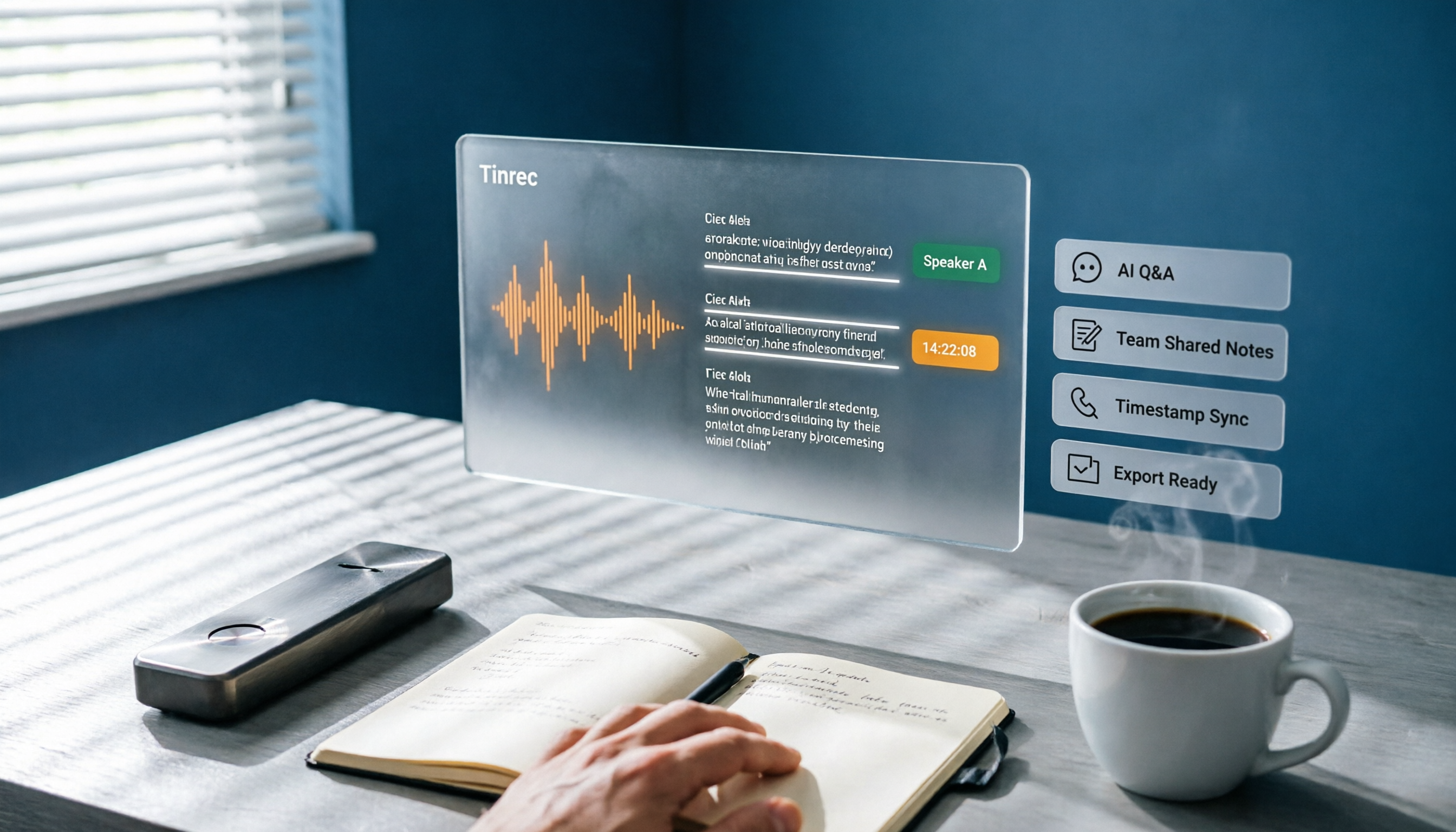
4 Interview Transcription Tools Compared in 2026: From Recording to Citable Text
After an interview, organizing the transcript often feels more exhausting than the interview itself. This article starts from 'recording to citable text' and compares 4 interview transcription tools, covering speaker labeling, AI Q&A, audio retention, and team sharing, plus common pitfalls and selection advice.

Tinrec vs Notta 2026: 5-Dimension Comparison for Chinese Meeting Transcription Tools
Starting from the decision focus of 'Do you want transcription, or usable meeting data?', this article compares Tinrec and Notta across 5 dimensions, covering selection criteria, a full breakdown of Tinrec, other options, and pitfalls to avoid, helping Chinese meeting users make a quick choice.

5 Transcription Tools Tested and Compared in 2026: Transcription Takes Too Long—Which One Actually Saves Time?
Transcription takes too long, and the problem is often not typing speed but the "listen, type, re-read" workflow. This article tests 5 transcription and AI meeting note tools, covering how to judge accuracy, post-meeting organization, audio retention and export, free quotas, and team seat licensing. It provides criteria you can follow directly and analyzes Tinrec's actual performance in bot-free recording, AI Q&A, and team knowledge retention.

2026 Comparison of 3 Audio-to-Transcript Tools: Which Offers the Best Free Tier and AI Q&A?
Just finished a meeting and realized no one took notes? Replaying the recording to type a transcript can eat up an entire afternoon. This article compares 3 audio-to-transcript tools, breaking down Chinese and mixed Chinese-English recognition, online meeting recording methods, AI summaries and Q&A, cross-platform use, and quota pricing. We also highlight 4 common pitfalls to help you choose a solution that truly saves time.
Tinrec vs Notta 2026: 5-Dimension Comparison — Which Writes Meeting Minutes Faster?
Struggling to finish meeting minutes? The problem is usually the process, not your writing. This article compares Tinrec and Notta across 5 dimensions: audio capture method, Chinese and mixed Chinese-English recognition, recording retention, post-meeting outputs, and team sharing. It explains how to use tools to get transcripts, summaries, and action items done in one go, with a pitfalls guide and selection advice.
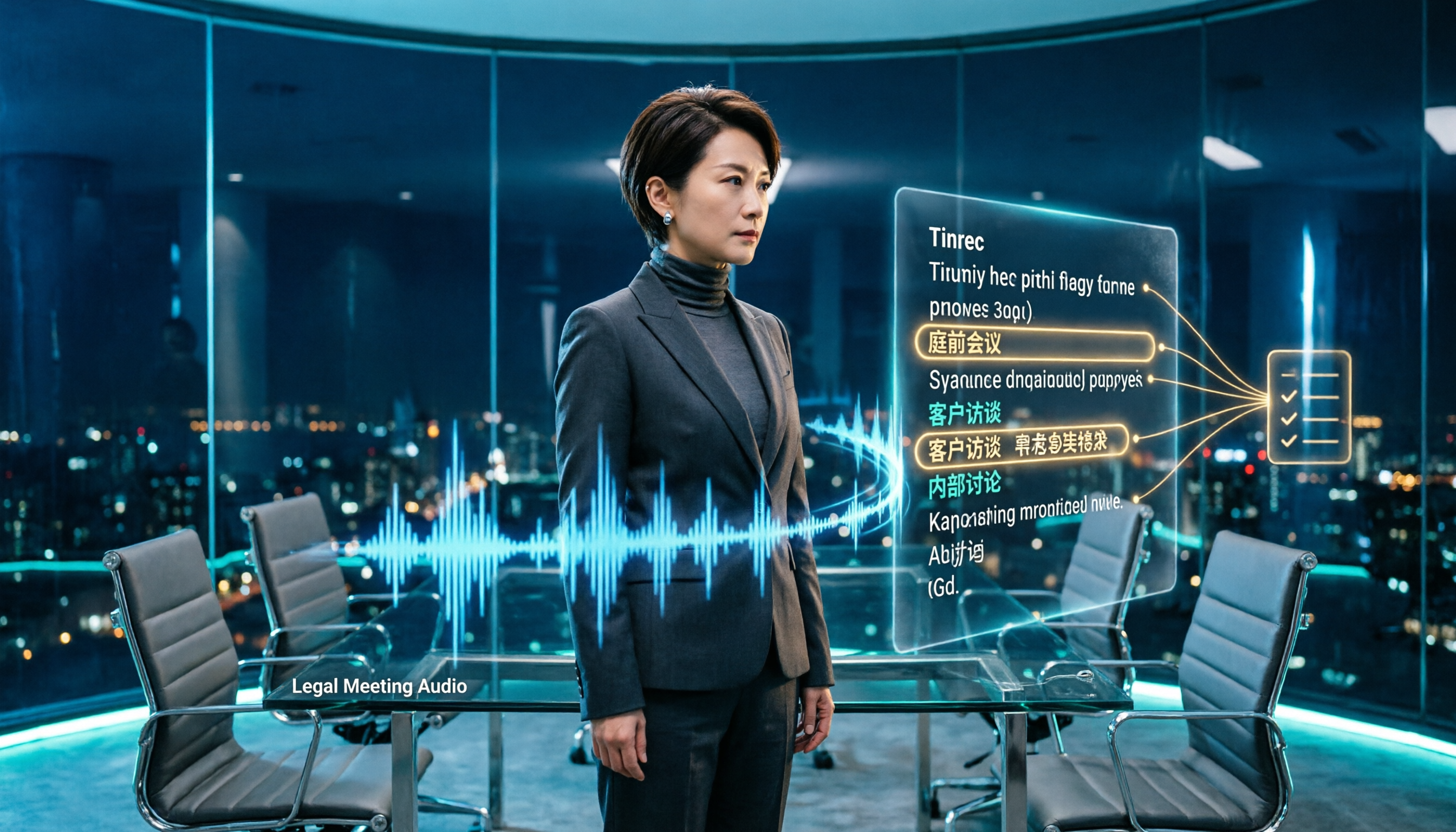
3 Legal Meeting Transcription Methods Tested in 2026: How Tinrec Helps You Avoid Common Pitfalls
Transcribing legal meeting recordings isn't as simple as dropping audio into a tool. This article explores common pitfalls and explains how Tinrec turns pre-trial meetings, client interviews, and internal discussions into searchable, queryable, and actionable transcripts and meeting materials. It also covers 5 key factors to consider when choosing a transcription tool.

4 Customer Interview Transcription Tools Tested in 2026: Which One Actually Saves You Cleanup Time?
Tired of spending hours on customer interview transcripts? We tested 4 tools, covering selection criteria, an in-depth look at Tinrec, and pitfalls to avoid, to help you find a transcription solution that truly saves you cleanup time.

2026 M4A to Text: 5 Tools Tested + AI Summaries and Action Items in One Go
M4A is the most common audio recording format, but converting it to text is just the first step. This article starts with common pitfalls, breaks down 5 key factors for choosing an M4A-to-text tool, tests how Tinrec turns an M4A file into a transcript, summary, action items, and queryable meeting data, and briefly reviews TurboScribe, Notta, and Granola for their use cases and things to watch out for.