

Turn recordings into transcripts and summaries in minutes
Upload audio or video for multilingual transcription, AI notes, and action items
After a two-hour cross-department meeting, you stare at scattered notes on your screen and can only recall "someone mentioned changing the specs." You want to turn the discussion into a transcript, so you open your phone and search for "speech to text app." Dozens of tools pop up—some free, some subscription-based, some requiring additional hardware.
I've already tried a round of them for you. Below, I compare Tinrec and Otter.ai in 5 steps to help you quickly decide which one is better for Chinese meetings, file organization, and team collaboration.
Tinrec vs Otter.ai: Quick Overview
Tinrec is an AI meeting notes and collaboration tool for individuals and teams. Beyond transcription, it emphasizes summaries, action items, AI Q&A, and team knowledge retention.
Otter.ai is a mature AI meeting assistant with strong support for English business meetings, and it also offers team and enterprise plans.
| Item | Tinrec | Otter.ai |
|---|---|---|
| Positioning | AI meeting notes and team collaboration | AI meeting assistant and meeting automation |
| Chinese experience | Focuses on Chinese, mixed Chinese-English, and multilingual | Primarily English business meetings |
| Free plan | Basic quota for trial | Basic: 300 minutes per month |
| Paid entry | Weekly, monthly, or yearly plans based on tasks | Pro annual: about USD 8.49/user/month |
Next, we'll compare 5 dimensions: Chinese recognition, meeting recording and input sources, audio retention, post-meeting organization, and team collaboration.
Dimension 1: Chinese and Mixed Chinese-English Recognition
Otter.ai performs well in English meeting transcription, but Chinese content is not its strong suit. If your meetings are in Chinese with occasional English technical terms, the results usually require more manual correction.
Tinrec, on the other hand, focuses on Chinese, Traditional Chinese, and mixed Chinese-English, supports multilingual meeting transcription, and offers real-time translation and bilingual transcripts.
Actual performance depends on recording quality, accent, background noise, and overlapping speakers—this applies to both tools. However, for Chinese meetings, Tinrec is more aligned with the needs of Taiwanese users.
→ This dimension: Tinrec is better for Chinese and mixed Chinese-English scenarios.
Dimension 2: Meeting Recording and Input Sources
Otter.ai's recording methods are mainly meeting bots and desktop, suitable for online meetings. File import quotas vary by plan; the Pro annual plan includes 10 document imports per month.
Tinrec's desktop version directly captures computer system audio, so for online meetings on Zoom, Google Meet, Microsoft Teams, Webex, etc., no additional bot is needed. It also supports live recording, mobile recording, audio and video file import, and some web link imports.
Note that Tinrec still requires you to open the desktop app to start recording; it does not automatically join all calendar meetings.
→ This dimension: Tinrec offers broader input sources and a simpler recording method.
Dimension 3: Audio Retention and Data Integrity
Whether Otter.ai retains meeting audio depends on the product and plan. If you need long-term archiving, it's best to confirm before use.
Tinrec supports retaining original audio. The team version also provides an audio recycle bin; accidentally deleted audio can be restored before permanent cleanup begins. The current retention period for the recycle bin is 30 days.
For meetings that require replay for verification, whether recordings can be retained and accidentally deleted files can be recovered is actually more critical than transcription speed.
→ This dimension: Tinrec is more complete in audio retention and recovery.
Dimension 4: Post-Meeting Organization and AI Applications
Otter.ai offers summaries, action items, AI Chat, and team analytics. It is quite mature in meeting automation, with many integrations and workflow options accumulated over the years.
Stop organizing recordings by hand
Upload audio or video and automatically get a transcript, summary, and action items
In addition to summaries, chapters, to-dos, and AI Q&A, Tinrec also supports mind maps, real-time translation, and can generate reports, tables, and documents via Agent, then export to Notion, Google Docs, OneNote, Dropbox, etc. for further use.
If you want more than a transcript—material you can directly use for reports or tables—the variety of output files and export flexibility matters.
→ This dimension: Tinrec offers richer post-meeting outputs and export options.
Dimension 5: Team Collaboration and Governance
Otter.ai's Business plan provides mature team and enterprise capabilities, suitable for companies that already have team management needs.
Tinrec's team version provides independent team spaces, allows inviting members via join links, and distinguishes owners, admins, and regular members. It manages "roles" and "seats" separately: roles determine who can manage the team, seats determine who can record, upload, edit, and export.
Admins can also view usage trends, member rankings, and details, and query or export audit logs. When a member leaves, is removed, or loses their seat, their team resources are transferred to other active members.
→ This dimension: Both have team capabilities, but Tinrec is clearer on seat and resource transfer details.
What Are the Unique Advantages of Each?
Tinrec's unique advantages:
- Chinese and mixed Chinese-English experience: Designed for Chinese meetings, supports real-time translation and bilingual transcripts.
- Bot-free desktop recording: Directly captures system audio, no extra bot needed to join online meetings.
- Audio retention and file import: Supports audio and video files; team version offers an audio recycle bin.
- Team governance: Roles and seats managed separately, with usage analytics, audit logs, and resource transfer.
Otter.ai's unique advantages:
- Maturity in English business meetings: Long-standing focus on English meeting transcription, with many integrations and workflow options.
- Meeting automation and team analytics: Provides complete automation and analytics for English meeting scenarios.
Conclusion: Which One Should You Choose?
• If you frequently hold meetings in Chinese with mixed Chinese-English content → Tinrec (Chinese experience is key)
• If you want a recording method without a bot joining the meeting → Tinrec (desktop captures system audio)
• If you need to retain recordings and import historical files → Tinrec (supports audio retention and file import)
• If you need team spaces, seat management, and auditing → Tinrec (roles and seats managed separately)
• If your meetings are mainly in English and you only need meeting notes and summaries → Otter.ai is also mature
In one sentence: For Taiwanese users who mainly hold Chinese meetings, Tinrec is a closer fit. I suggest starting with the free version and testing with your own meeting recording to see if the recognition and organization results meet your expectations.
FAQ
What can Tinrec's free version do?
The free version provides a basic quota to experience recording, import, summaries, and transcription. If you use it frequently, consider weekly, monthly, or yearly plans based on your needs.
Does Tinrec require a meeting bot to join?
No. The desktop version directly captures computer system audio for Zoom, Meet, Teams, Webex, etc. However, you need to open Tinrec yourself to start recording; it does not automatically join all calendar meetings.
Does Tinrec support Chinese?
It supports Chinese, Traditional Chinese, and multilingual meetings, and offers real-time translation and bilingual viewing. Actual performance depends on recording quality, accent, and background noise.
Can team members without a seat see data?
They can view, play, and read team data; only after obtaining a seat can they record, upload, edit, and export.
Will team data disappear when a member leaves?
No. Team resources belong to the team. When a member leaves or is removed, their resources are transferred to other active members.
Is Otter.ai suitable for Chinese meetings?
Otter focuses on English business meetings; Chinese content usually requires more manual correction. If your meetings are mainly in English, its maturity is still worth considering.
References
- Speech to Text - Google Play App
- Real-time Speech-to-Text App Recommendations 1. iPhone/iPad "Notes" App - Supports real-time text conversion - Cost: Free - Supports Chinese, English
- Text to Speech - Google Play App
- SoundType AI Ultra-Precise Transcription, Speech to Text, AI Dictation - Google Play App
- Voice Translation - Language Translator, Speech to Text, Translator - Google Play App
Turn every recording into actionable outcomes
Get 60 free transcription minutes when you sign in. No credit card required.
Related Reading
You might also like

3 Huawei Audio-to-Text Solutions Compared: How Tinrec Fills the Meeting Notes Gap
Many people search for 'Huawei audio to text' because they need to turn meeting recordings into transcripts, summaries, and action items. This article compares three common approaches: built-in device and cloud speech capabilities, online conversion tools, and Tinrec. From cross-platform recording and post-meeting organization to AI Q&A and team collaboration, we help you decide which fits your daily workflow.
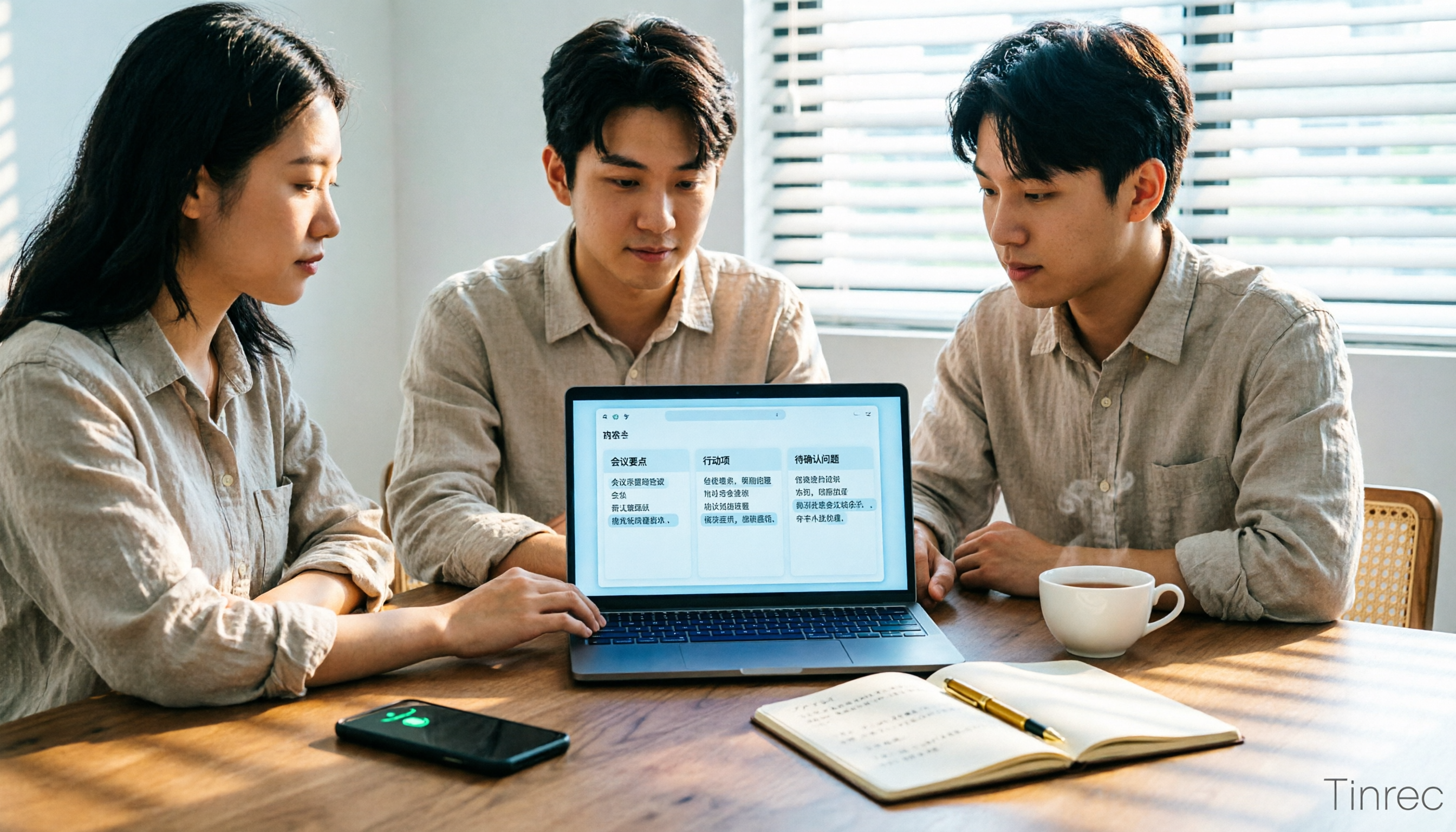
2026 Comparison of 2 Xiaohongshu Video-to-Text Tools: Which Is Better for Transcripts and Post-Meeting Organization?
The two most common pitfalls in converting Xiaohongshu videos to text: getting stuck when videos lack subtitles, and treating a transcript as the end goal. This article compares BibiGPT and Tinrec across 5 dimensions—link support, handling videos without subtitles, post-transcript organization, export formats, and team knowledge retention—to help you decide which tool fits your use case.

5 Photo-to-Text Tools Tested for 2026: Free OCR vs Built-in Features
You don't always need a separate app to turn photos into text—Google Lens, LINE, and Google Keep can do it for free. This guide shares hands-on experience with 5 image-to-text methods and pitfalls to avoid, plus why Tinrec is a better fit when your source is meeting or interview recordings.
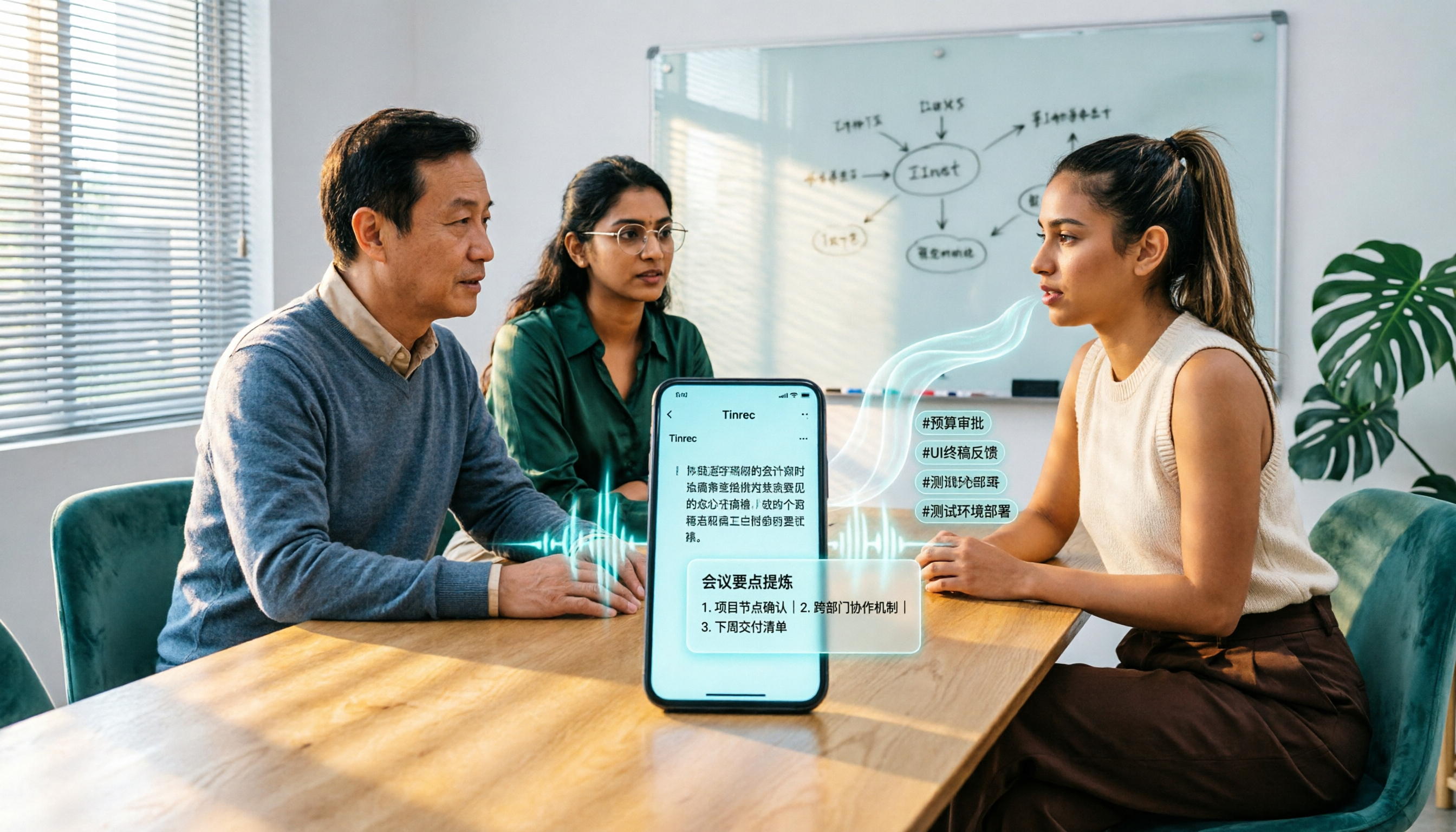
5 Best Honor Phone Audio-to-Text Tools Tested in 2026: Why Tinrec Wins on Chinese Accuracy and AI Summaries
The built-in recorder on Honor phones only captures audio—the real time sink is post-meeting organization. This article compares several audio-to-text solutions, using Tinrec as the primary example, to show how real-time transcription, AI summaries, action item extraction, AI Q&A, and team spaces turn meeting recordings into searchable, actionable data.

2026 Comparison of 3 Bilibili Video-to-Text Solutions: Tinrec Personal, Team, and Otter.ai — Which Is Best for Chinese Videos?
2026 latest Bilibili video-to-text tool comparison! This in-depth review compares Tinrec Personal, Team, and Otter.ai on Chinese transcription, AI summaries, team collaboration, and pricing, with FAQs and selection advice to help you find the best Chinese video-to-text solution.
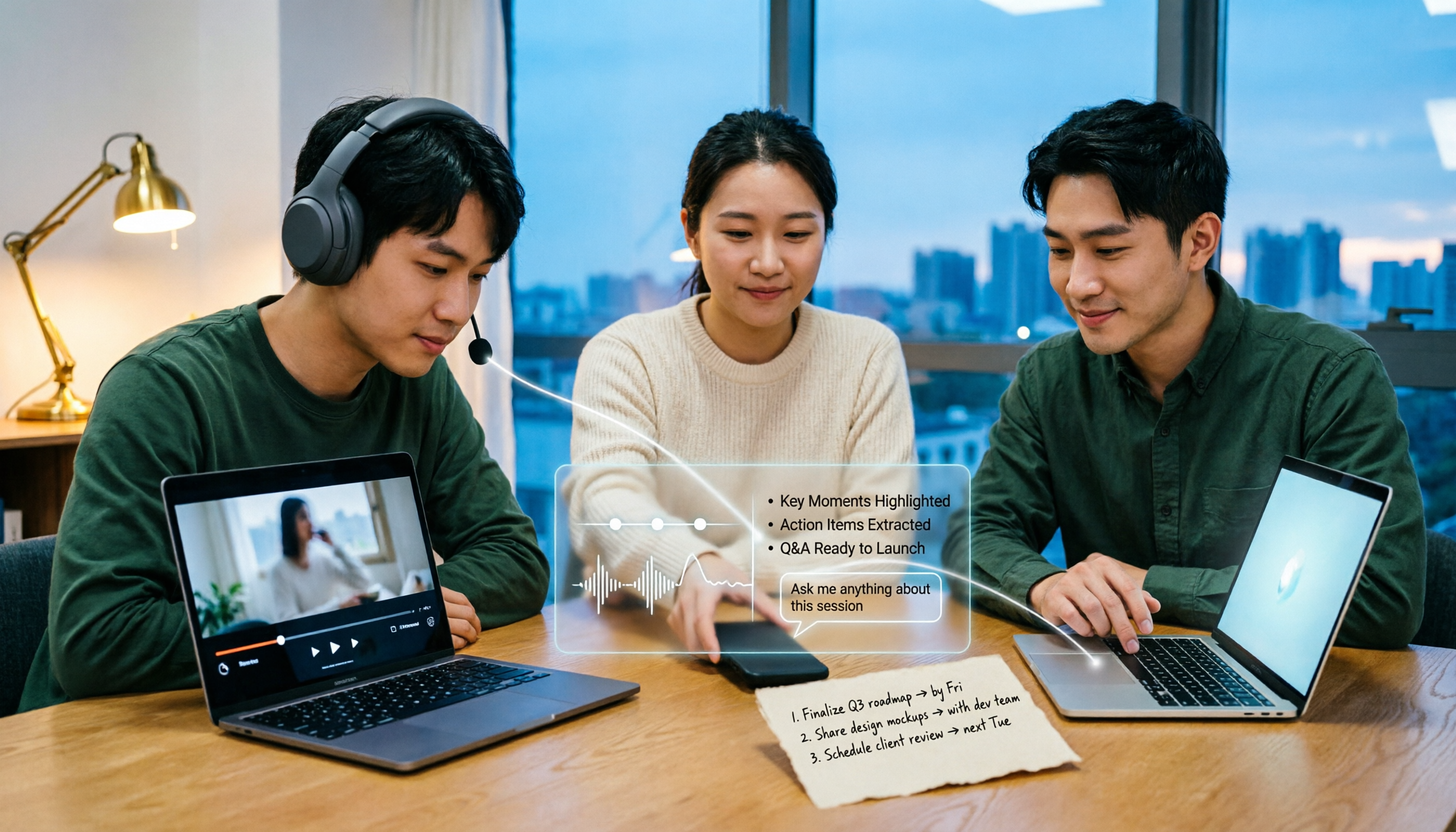
5 Bilibili AI Summary Tools Tested in 2026: Which One Actually Saves Time on Long Videos?
Your Bilibili watch later list keeps growing, but you never finish watching? We tested 5 Bilibili AI summary tools, comparing subtitle recognition, AI follow-up questions, cross-device support, and team sharing. We also honestly explain how Tinrec handles meeting recordings while organizing videos, helping you pick the one that truly saves time.
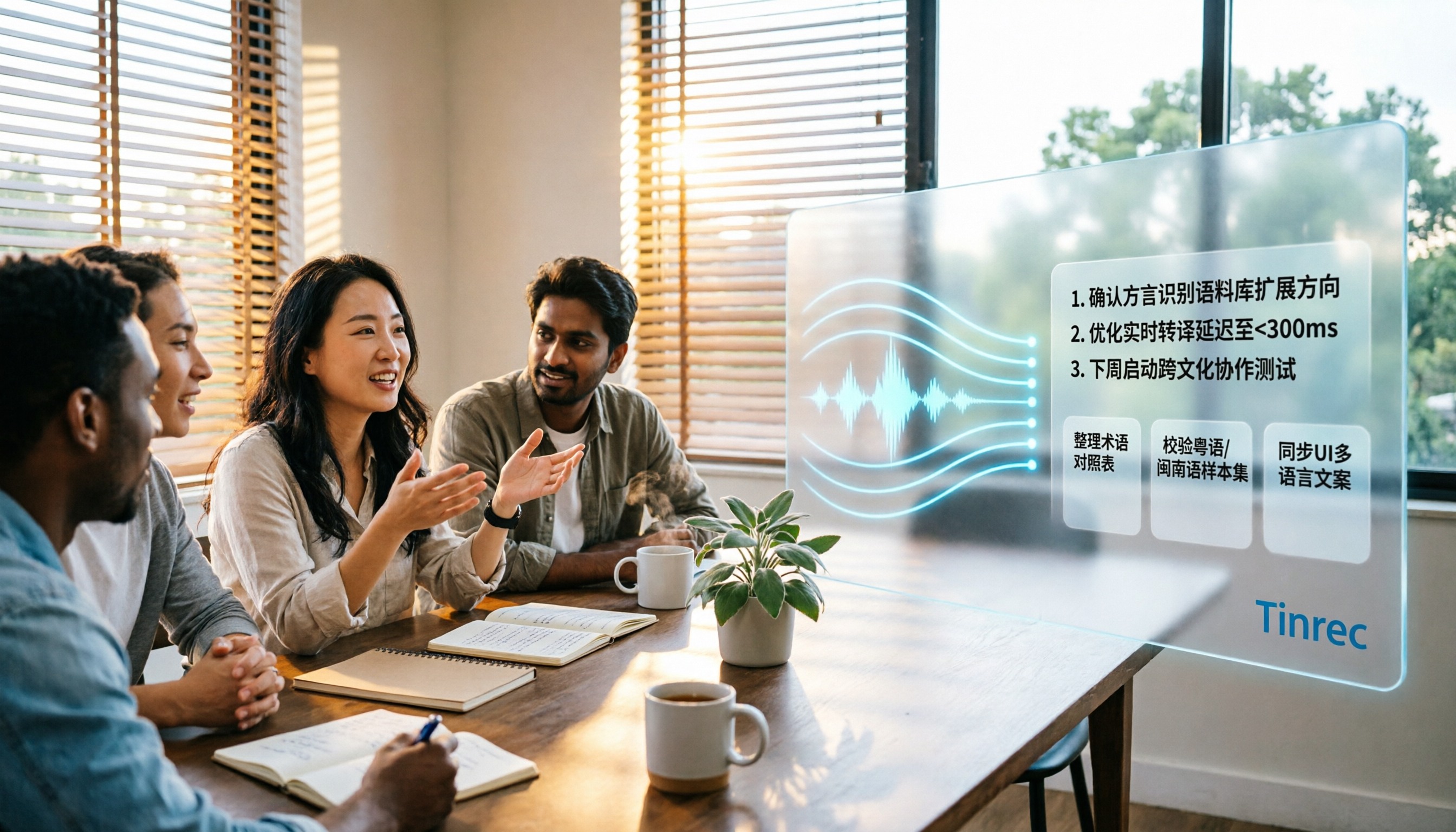
Tinrec vs Notta 2026: 5-Dimension Comparison — Which Is Better for Dialect Transcription and Meeting Organization?
A tool review for dialect-to-text needs, comparing Tinrec and Notta across 5 dimensions: language support, post-meeting organization, recording retention, team collaboration, and pricing, with buying advice.

4 AI PPT Summarizers Tested in 2026: First Decide Whether You're Summarizing Slides or Meetings
Looking for an AI that can summarize PPTs? First, figure out whether you need to read an existing presentation file or meeting content that hasn't been turned into slides yet. This article compares SlidesPilot, Linnk, Microsoft 365 Copilot, and Tinrec, and explains how Tinrec, starting from meeting recordings, turns transcripts, summaries, and action items directly into presentation material.

4 Meeting Transcription Tools Tested for 2026: Auto-Generate Minutes Without a Meeting Bot
The biggest pitfalls in meeting transcription are transcribing recordings word by word after the meeting or treating built-in transcripts as meeting minutes. This article compares four tools—Tinrec, Otter.ai, Granola, and PLAUD—using the same testing method, breaking down recording methods, output content, Chinese recognition, and team data ownership, with buying criteria and a guide to avoiding pitfalls.