

Turn recordings into transcripts and summaries in minutes
Upload audio or video for multilingual transcription, AI notes, and action items
2026 Comparison of 4 Meeting Minutes Tools: Which One Actually Saves You Post-Meeting Time?
You Can't Finish Meeting Notes—The Problem Isn't Your Typing Speed, It's That You're Recording the Wrong Things
Most people write their meeting notes after the meeting, relying on memory to piece together a chronological account. But what truly needs to be captured isn't a full transcript of who said what—it's three things: what decisions were made, who is responsible, and when it's due.
I lead a team of 10 and have about 15 meetings a week: weekly meetings, project progress meetings, one-on-ones, cross-department coordination, and regular reports to my boss. What I used to dread wasn't the meeting itself—it was the aftermath, because that's when my work really began.
Over the years, these are the pitfalls I've encountered:
- Writing notes after the fact: Starting three hours after the meeting ends, I only remember 60% of the details, and decisions come out vague.
- Submitting only a transcript: Thinking that converting audio to text is enough, but then the boss has to read for 30 minutes and still can't find the conclusion.
- Verbal assignments without records: Telling a colleague something without writing it down, then two days later they say, "I thought it wasn't urgent."
- Recordings nobody listens to: Twenty audio files sitting on my phone; when I need to find a specific discussion, I have to listen from the beginning.
Later I realized there's a more sensible approach: instead of fixing things after the meeting, let the tool turn content into usable data while the meeting is happening. Real-time transcription during the meeting, and by the time it ends, the summary, decisions, and action items are already organized—you just spend a few minutes confirming.
This article shares my experience testing and comparing 4 common meeting minutes tools from a manager's perspective, focusing on one thing: can it save me time in the post-meeting phase?
Before Choosing a Meeting Minutes Tool, Understand These 4 Key Points
1. Actual audio capture and transcription performance—don't just look at official numbers. Many tools claim "98% accuracy," but that's usually measured in a quiet recording studio. Real meeting rooms have air conditioning noise, keyboard clicks, and people talking over each other, so performance drops. The simple way to judge: take a recording of your own meeting and see if the Chinese transcript it produces is "readable as is."
2. Does it have "post-meeting" capabilities? That's where time savings come from. A transcript is just raw material. Can it automatically generate summaries, chapters, and action items? Can you later ask it in one sentence, "What was the conclusion of the last meeting?" That's where the difference lies. A tool that only transcribes means you still have to read the entire transcript yourself.
3. Can it handle the meeting formats you actually use? Are your meetings online (Zoom, Google Meet, Microsoft Teams, Webex), in-person, or a pre-recorded file a colleague sent you? Some tools only work with online meetings, some require you to invite a bot into the meeting, and some can't even import existing audio files. First list what your week of meetings looks like, then choose a tool.
4. Quotas, seats, and team sharing. Using it individually is one thing; sharing it with a team is another. Pay attention to whether the free quota is sufficient, whether file imports consume extra quota, whether team members can view historical meetings together, and who has editing permissions. If you don't think these through, you might buy it only to find it can't be shared—that's the biggest hassle.
Tinrec—The One My Team Kept After Testing
Tinrec is an AI meeting notes and collaboration tool for individuals and teams, supporting iOS, Android, and web, with a desktop version for handling online meetings on your computer.
I mainly use it in three scenarios:
First, no more inviting bots to online meetings. Previously, with meeting bots, there was always an extra "participant" on the list, and clients would ask, "Who is that?" Tinrec's desktop version directly captures your computer's system audio to handle meetings on Zoom, Google Meet, Microsoft Teams, and Webex, without inviting any bot.
Second, the moment the meeting ends, the summary and action items are already there. During the meeting, it transcribes in real time; after it ends, it automatically generates a summary, chapters, and action items—who is responsible for what and when it's due, listed directly. Now I can paste the action items into the group chat 5 minutes before the weekly meeting ends, without retyping them back at the office.
Stop organizing recordings by hand
Upload audio or video and automatically get a transcript, summary, and action items
Third, you can ask it directly after recording. This is my most-used feature. When my boss asks, "Who proposed that budget last time?" I no longer flip through notes—I just ask the recording, and it answers based on the content, rather than giving me a bunch of keyword search results. It can also generate reports, tables, or documents from the meeting content; for cross-language meetings, you can view the original, translation, or bilingual during recording.
Honestly, there are limitations: Chinese transcription performance is affected by audio quality, accents, multiple people talking over each other, and technical terms. I won't guarantee "zero errors"—I still double-check important numbers and commitments against the recording. Also, team members without a seat can view and play back but cannot upload, edit, or export—make this clear to colleagues beforehand, or some may think buying it means everyone can edit together.
For the team version, first-time eligible users get a 7-day trial, 1 free seat, and 300 minutes of team shared import quota; monthly is USD 29.80 per paid seat per month, annual is USD 199 per paid seat per year (about USD 16.58 per month), each paid seat provides 2,000 minutes of team shared import quota per month, and real-time recording currently does not deduct minutes—only file and web link imports use the team shared quota. Prices and benefits are subject to the official purchase page.
Who it's for: Those who have 5+ meetings a week, mainly in Chinese or mixed Chinese-English, need to keep decisions and action items, and want the team to share historical meeting data together.
Besides Tinrec, What Other Options Are There?
Otter.ai: A mature English meeting assistant with a free version offering 300 minutes per month, sufficient for English business meetings. If your meetings are almost entirely in English, it's worth trying first. But if meetings are mainly in Chinese or mixed Chinese-English, Tinrec's Chinese and Traditional Chinese organization workflow, plus team hotword maintenance for technical terms, will be closer to your daily needs.
Granola: Also takes the no-bot approach, focusing on "your handwritten notes plus AI enhancement," with a good cross-meeting context experience. Note that it doesn't support uploading pre-recorded audio files and doesn't save meeting audio. If you need to check the original audio afterward or organize existing recordings from colleagues, Tinrec not only retains recordings but also imports files.
PLAUD Note / NotePin: Representatives of AI recording hardware, with NotePin starting at USD 159, suitable for portable recording, phone call recording, and other physical scenarios. The downside is having to buy an extra device. If most meetings happen on your computer, Tinrec requires no additional hardware—web, desktop, and mobile all work, and post-meeting organization and team sharing are handled together.
Pitfall Guide: The 4 Most Common Mistakes When Choosing a Meeting Minutes Tool
Pitfall 1: Only looking at the official accuracy rate. That's a number under specific conditions, not your meeting room. It's best to test with a recording of your own, especially a real meeting with people talking over each other and background noise—you'll know if it's readable right away.
Pitfall 2: Treating "having a transcript" as "having meeting minutes." A transcript is raw material; minutes are the finished product. When choosing a tool, check if it has summaries, chapters, action items, and post-meeting Q&A; otherwise, you're just replacing "typing" with "reading 30 minutes of text," saving very little time.
Pitfall 3: Assuming it will automatically join all your meetings. Most tools still require you to press start recording or manually activate during the meeting. Before buying, confirm which capture methods it supports (system audio, bot, file upload), so you don't find out it doesn't fit your meeting habits after purchase.
Pitfall 4: Using a personal version as a team version. For team sharing, it's not about price but seats and permissions: who can edit, who can only view, and who owns the data after a member leaves or loses their seat. For example, Tinrec's team version manages roles, seats, and team shared quota separately; when a member leaves, data stays with the team and is handed over to other members—this design prevents meeting data from leaving with the person.
Conclusion: Which One Should You Choose?
In one sentence: If you want to "spend less time after meetings," Tinrec is the one I kept after testing.
- Meetings mainly in Chinese or mixed Chinese-English, need automatic summaries and action items → Tinrec
- Want to ask for conclusions in one sentence after the meeting, without manually Ctrl+F through transcripts → Tinrec (AI Q&A)
- Don't want to invite bots to online meetings or let clients see unfamiliar participants → Tinrec desktop version (system audio capture)
- Team needs to share historical meetings, manage seats and usage → Tinrec team version
- Meetings almost entirely in English, zero budget → Otter.ai (the only exception in this article)
Finally, don't rush to pay. Use the free quota to run one of your own weekly meetings, see if the transcript and action items it produces can be used directly, then decide whether to upgrade.
References
- Meeting Ink - 2026 AI Meeting Minutes Tools Tested | 7 Speech-to-Text and Summary Speed Comparison | Meeting Ink - AI Meeting Minutes Assistant Automatic Transcription Transcript Summary Meeting Summary
- No Time Limit! 3 Free AI Transcript Tools, Highly Recommended! AI Voice Notes Generate Meeting Minutes, Presentations, Mind Maps | 104 Workplace Power
- Recently many people ask me if there are AI tools for meeting notes. They still type manually, often can't multitask, and waste time. I always answer—SeaMeet. Why recommend? Here's a summary: -Linked to Google Meet, online meetings sync transcripts and real-time summaries, super convenient. -No need to refresh, after the meeting, directly email all participants. -Operation is super simple, even older people who've never used AI tools, I taught them in 10 minutes. -In-person meetings
- AI Meeting Notes Generator
- AI Meeting Notes Software Recommendations: 5 Major Apps Tested and Compared, Automatic Transcription Makes Meetings Super Easy!
Turn every recording into actionable outcomes
Get 60 free transcription minutes when you sign in. No credit card required.
Related Reading
You might also like
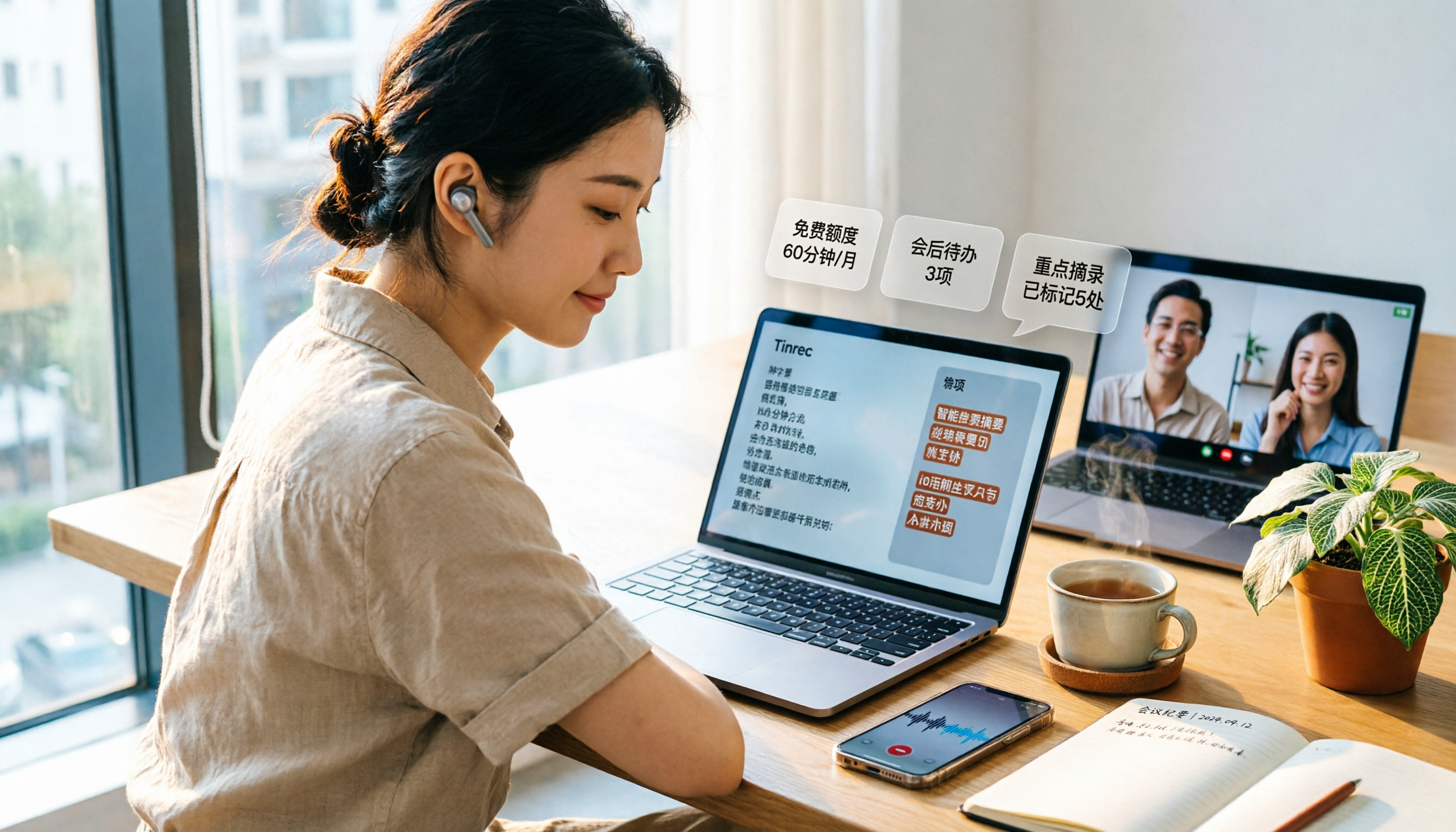
3 Free Audio-to-Text Tools Tested and Compared in 2026: Is the Free Tier Enough?
How do you choose a free audio-to-text tool? This article examines four key aspects: the unit of the free quota, Chinese recognition, post-meeting organization capabilities, and online meeting support. It compares the free plans of Tinrec, Notta, Otter.ai, and TurboScribe, and highlights the three most common pitfalls to help you find the one that truly meets your needs.

How to Choose a Free AI Transcription Tool in 2026: 5 Steps from Recording to Meeting Minutes
Starting from a mid-level manager's real meeting scenarios, this article breaks down the four key factors for choosing a free AI transcription tool, tests Tinrec's 5-step workflow, compares it with Notta, Otter.ai, and MyEdit, and includes pitfalls to avoid—helping you pick a tool that truly works after the meeting.

4 Image-to-Text OCR Tools Compared in 2026: How to Choose Between Free OCR and Tinrec for Meeting Notes
A guide to key considerations for choosing image-to-text (OCR) tools, comparing imagetotext.me, Gaitubao, Google Keep, and Chenghua OCR, plus when to use Tinrec for meeting transcription.

3 AI Meeting Note Apps Tested in 2026: Why Huawei Users Ultimately Chose Tinrec
From the perspective of a mid-level manager, this article analyzes the search intent behind "Huawei AI meeting notes" and uses Tinrec as an example to explain how AI meeting notes can automatically generate transcripts, summaries, and action items, and how these can be stored in a team space as searchable, collaborative data. It includes features, use cases, buying advice, and FAQs.

2026 AI Audio-to-Text Showdown: Tinrec vs PLAUD Note — Which Is Better for Chinese Meetings?
We compare Tinrec and PLAUD Note across meeting capture, Chinese-language experience, post-meeting workflow, team collaboration, and pricing to help you decide which AI audio-to-text tool fits your needs.

2026 Comparison of 2 Online YouTube Video Analysis Tools: From Video Link to Transcript Organization
Many people think YouTube video analysis means finding a website to download videos, but the real need is turning video content into searchable, organizable data. This article starts from common misconceptions and compares Tinrec and Notta across 5 dimensions: video link import, Chinese transcription, AI Q&A, team collaboration, and export workflows, helping you find a more suitable video analysis and transcript organization solution.
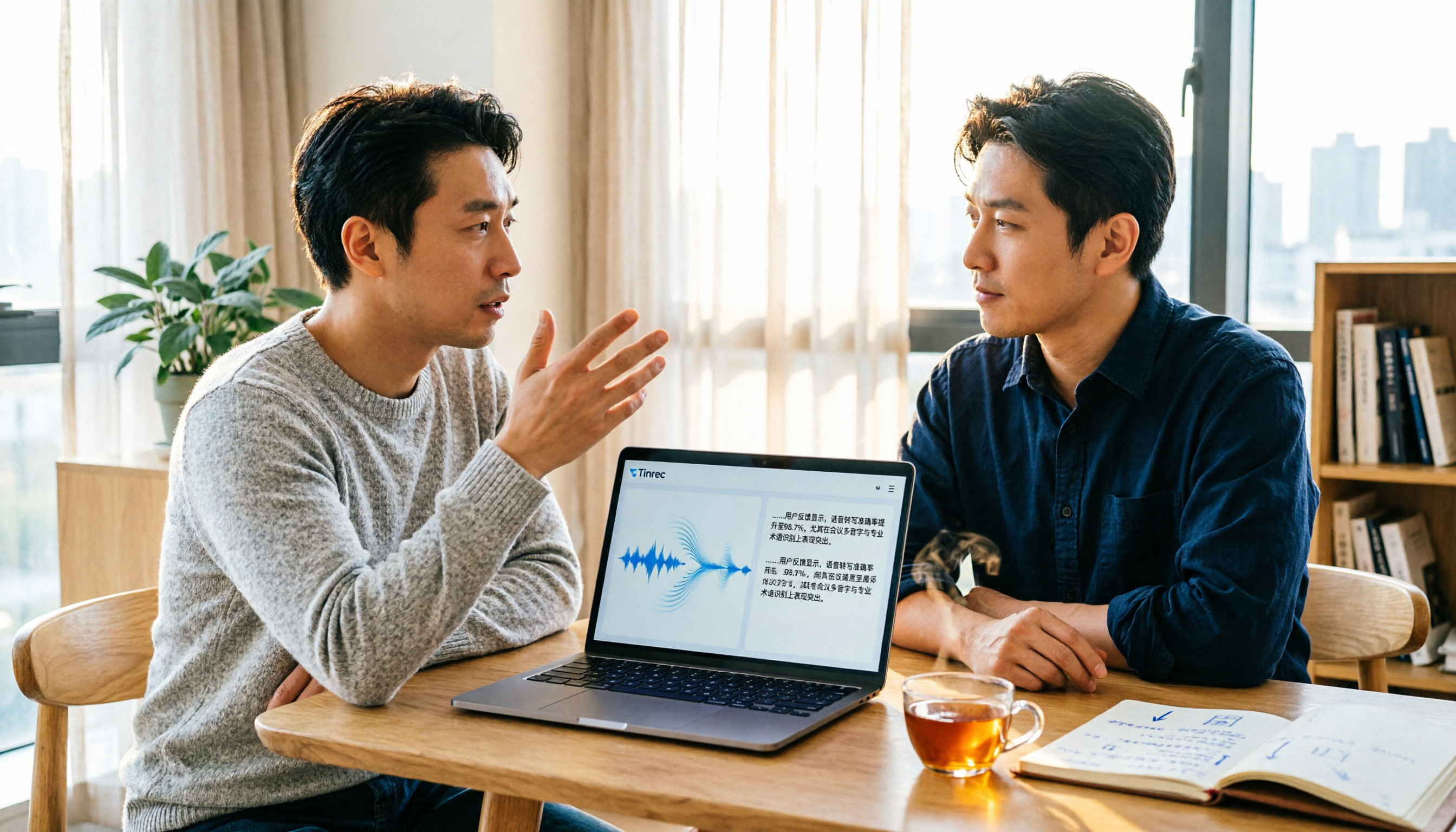
2026 Video and Audio Transcription Tools Buying Guide: 2 Tested Picks and Recommendations
When converting videos, interviews, or meeting notes to text, the first thing to determine is: are you dealing with a pre-recorded video file or a live meeting? This article compares two solutions, Tinrec and PLAUD Note, across six dimensions: video and audio input, Chinese recognition, post-transcription processing, audio file storage, team collaboration, and upfront cost, to help you decide which one better fits your use case.
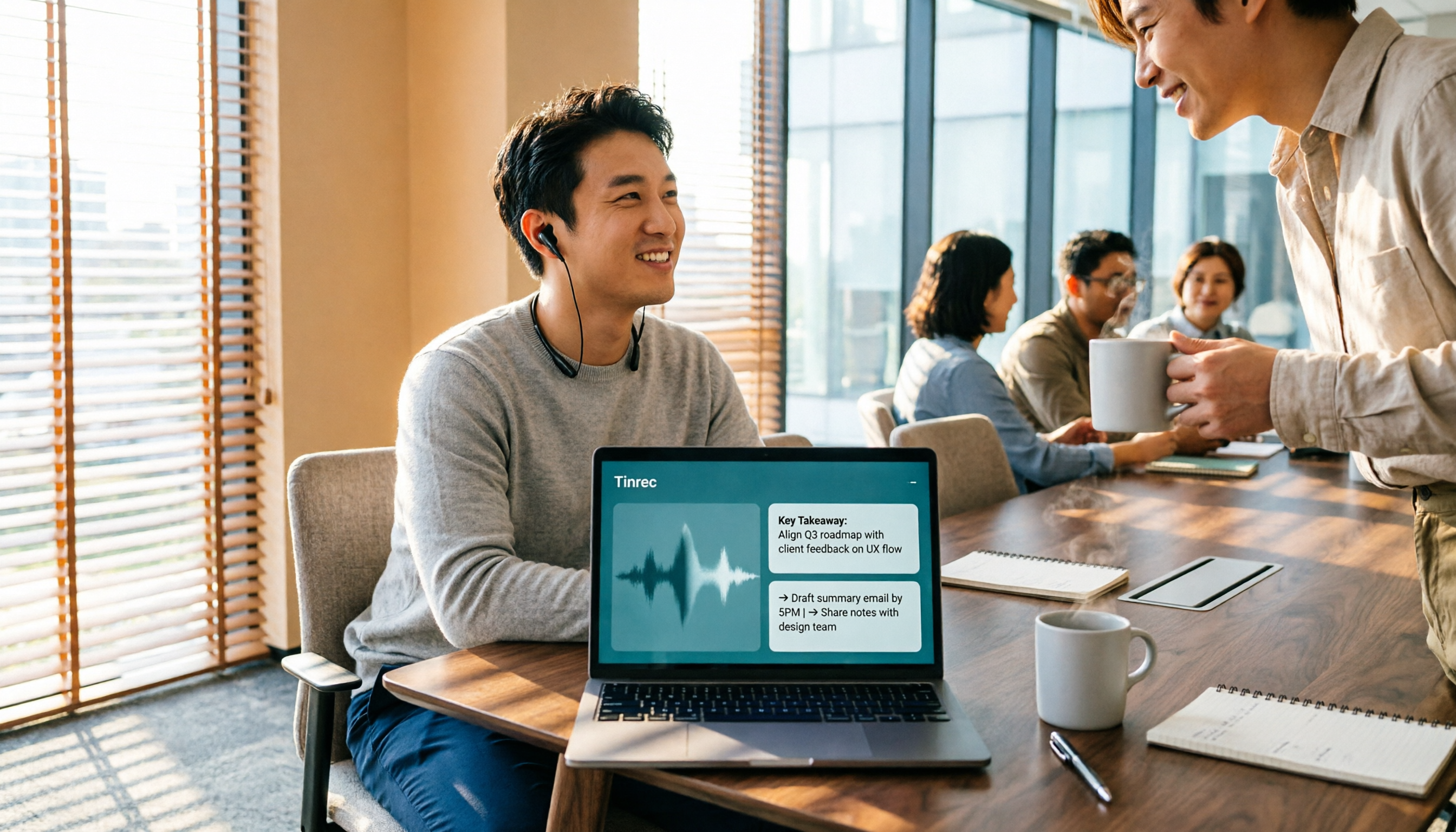
4 Voice-to-Meeting-Minutes Tools Tested for 2026: Is the Free Version Enough? Which Saves the Most Time After Meetings?
After a meeting, spending time organizing minutes is a daily pain point for most office workers. This article compares four voice-to-meeting-minutes tools: Tinrec, Otter.ai, Notta, and PLAUD. It covers recognition scenarios, post-meeting summaries and action items, online meeting recording methods, team data ownership, and free version limitations, with key tips to avoid pitfalls when choosing a tool.

4 iPhone Audio-to-Text Methods Tested in 2026: Is the Built-in Free Option Enough, or Does Tinrec Save More Time?
iPhone's built-in Voice Memos and Notes apps can already turn recordings into transcripts, but what happens after? This article starts from real student scenarios—lectures, group discussions, and finals review—and tests 4 iPhone audio-to-text methods, covering key buying factors, common pitfalls, and the best choice for students.